
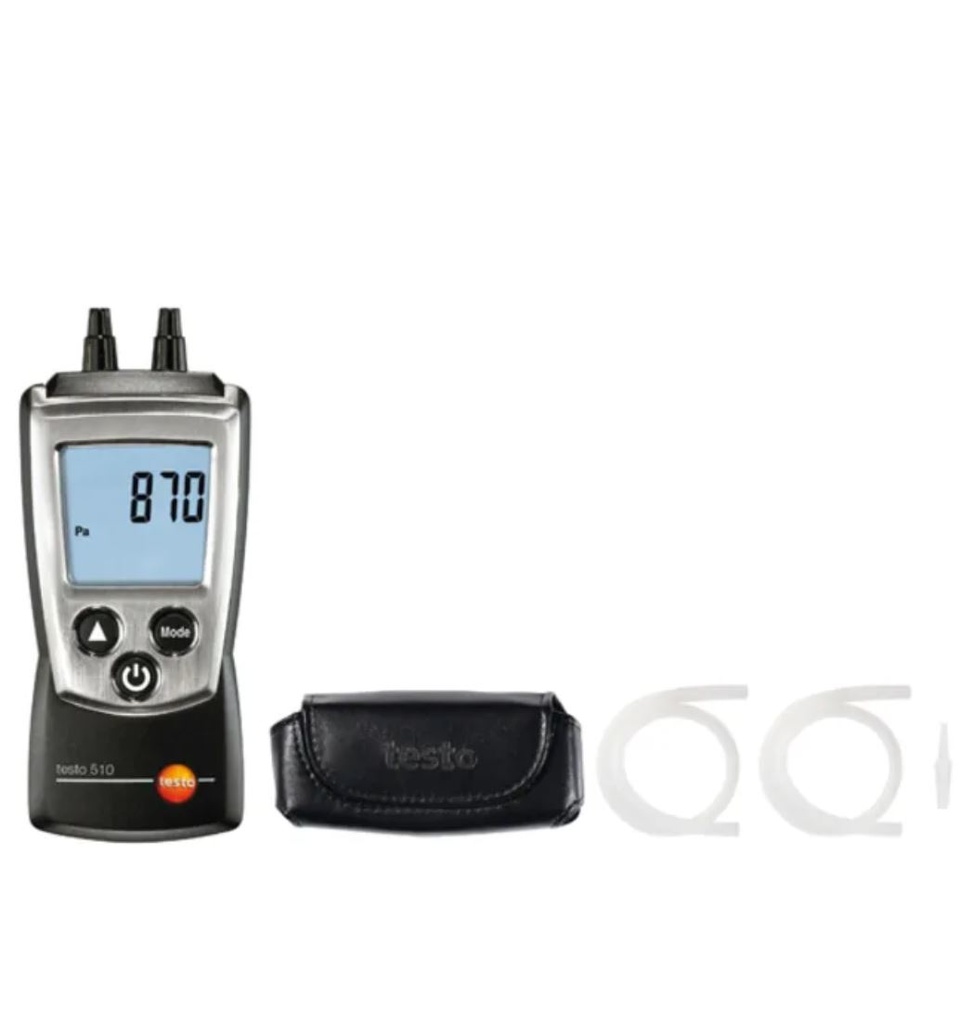
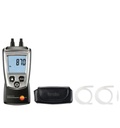
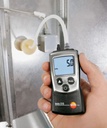
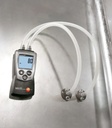

testo 510 Set differential pressure measuring instrument
- Differential pressure measurement from 0 to 100 hPa
- Flow measurement possible with a Pitot tube (available as an option)
- Magnets on the rear allow hands-free work
- 10 units to choose from, display in pascals can be selected
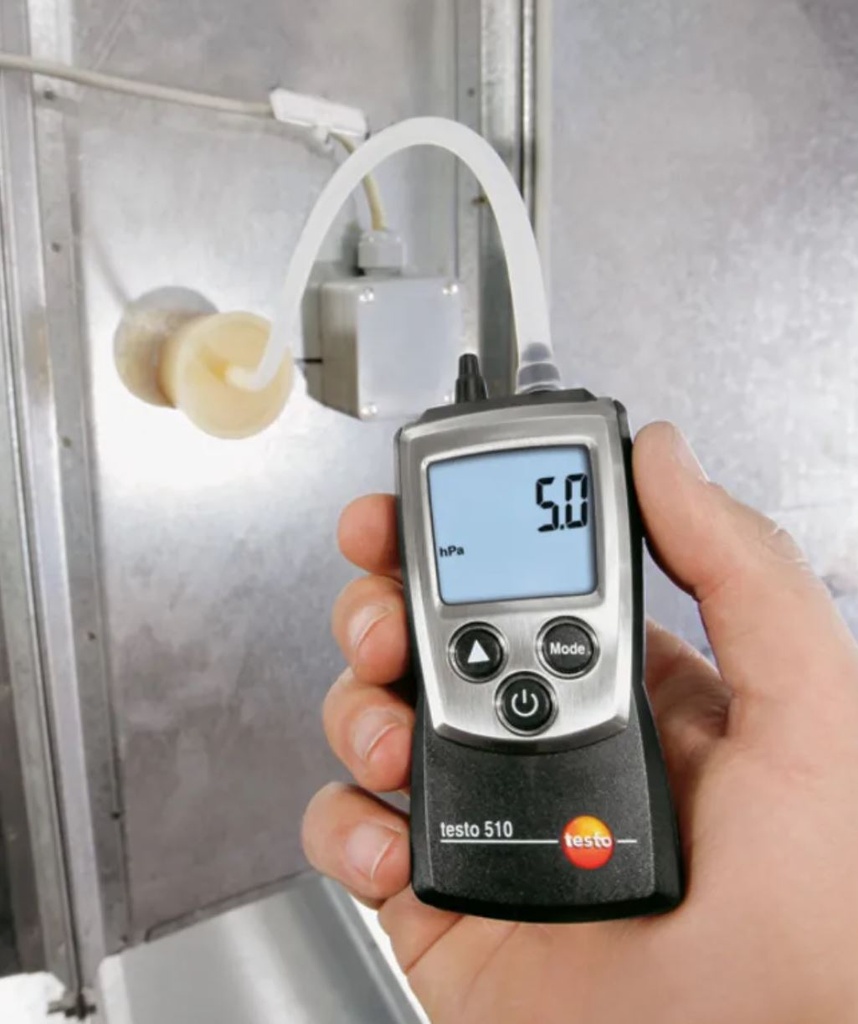
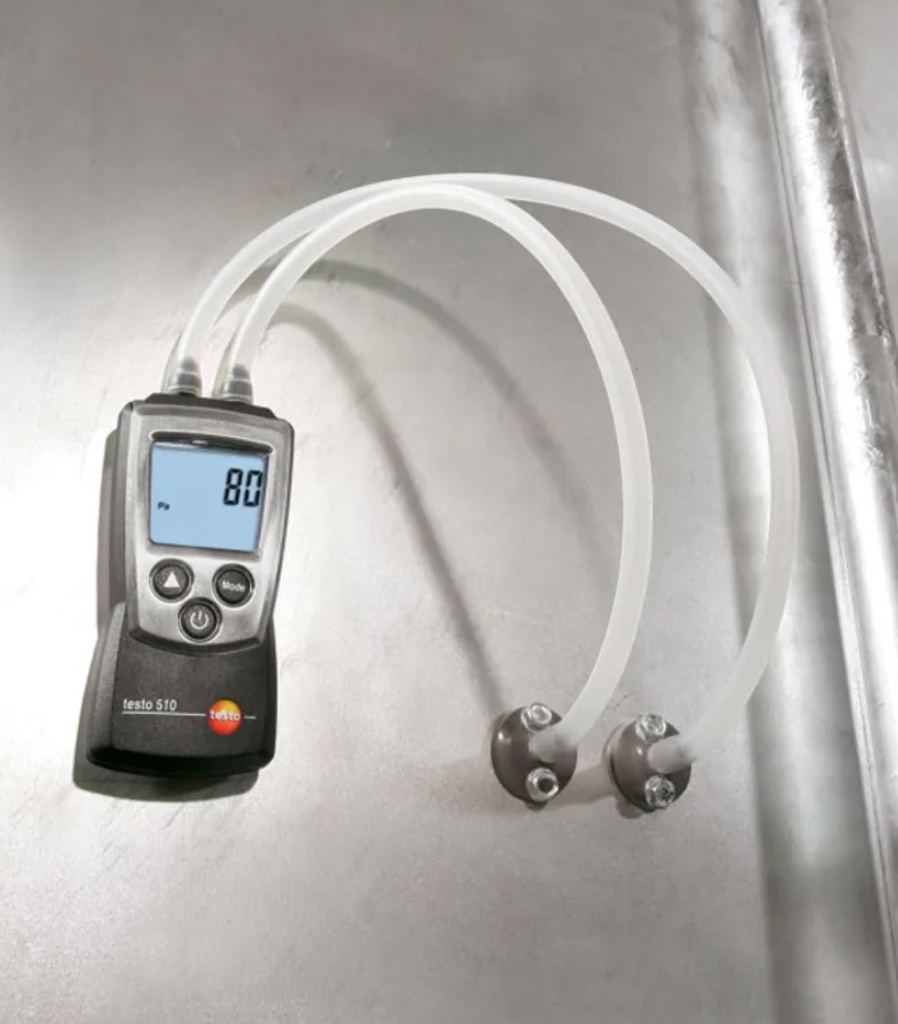
Differential pressure measurement on gas hot water heaters or on filters of air conditioning systems, and also flow measurements in ventilation ducts using a Pitot tube: the compact testo 510 differential pressure measuring instrument, which comes with a silicone connection hose and other useful accessories, can help you maintain and install systems in the sanitary and HVAC sector.
Internal Reference :
0563 0510Description
The testo 510 set is a compact and reliable solution for professionals who need accurate differential pressure measurement in heating, ventilation, and air-conditioning systems. This Testo differential pressure instrument is ideal for heating installers and air conditioning engineers who regularly check filters, monitor system performance, or measure static gas and gas flow pressure.
The differential pressure meter measures pressure in the range of 0 to 100 hPa and supports multiple units, including Pa, hPa, mbar, mmH₂O, mmHg, inH₂O, inHg, psi, as well as airflow units like m/s and fpm. This flexibility makes everyday measurements quick and convenient.
With an optional Pitot tube, the testo 510 set can also be used for airflow measurements in ventilation ducts, covering air velocity from 10 to 100 m/s. Easy to use and highly accurate, it is a practical tool for routine field applications
The following units can be selected on the testo 510 differential pressure measuring instrument:
- Pa
- hPa
- mbar
- mmH2O
- mmHg
- inH2O
- inHg
- psi
- m/s
- fpm
In addition, you can measure the flow in the ventilation duct with a Pitot tube that is available as an option – from 10 to 100 m/s.
Practical and precise: key advantages offered by the differential pressure measuring instrument
- Precise: the differential pressure measurement has temperature and air density compensation for accurate readings
- Uncomplicated: small, handy and easy to operate with just three buttons
- Clever: you can work with your hands free thanks to magnets on the rear of the instrument. When there is poor visibility, such as in dark surroundings, the illuminated display makes it easier for you to work
- Reliable: a belt pouch and plug-on protective cap mean the differential pressure measuring instrument can be safely stowed away and it is also well-secured during measurement thanks to a wrist strap
- Ready to go: the silicone connection hose is included in the testo 510 set. So you can start your measurements straight away
Delivery Scope
testo 510 set differential pressure measuring instrument, including silicone connection hose, protective cap, calibration protocol, belt pouch and batteries.
Frequently Asked Questions
The testo 510 set typically includes the differential pressure measuring instrument, a protective cap, a belt pouch, two hoses, and a calibration protocol. It is designed to be ready for immediate use in the field.
Yes! While it is a differential pressure meter, you can use it to measure air flow velocity in ventilation ducts by pairing it with an optional Pitot tube. It can measure air flow from 10 to 100 m/s.
The testo 510 features powerful magnets on the rear of the device. This allows you to attach the instrument directly to a boiler or metal duct for hands-free operation while you adjust the system or monitor readings.
Absolutely. This testo differential pressure instrument is ideal for measuring static gas pressure and gas flow pressure on heating systems, ensuring they are operating within safe and efficient parameters.
The testo 510 set has a measurement range of 0 to 100 hPa. It is temperature-compensated to ensure that your differential pressure measurement remains accurate even when temperature fluctuations occur on-site.
Yes, the instrument comes with a backlit display, making it easy to read your measurement data in poorly lit boiler rooms or dark ventilation shafts.
| Parameters | |
|---|---|
| Accuracy | ±0.03 hPa (0 to 0.30 hPa) ±0.05 hPa (0.31 to 1.00 hPa) ±(0.1 hPa + 1.5 % of m.v.) (1.01 to 100 hPa) |
| Measuring range | 0 to 100 hPa |
| Resolution | 0.01 hpa |
| General technical data | |
| Brand | Testo SE & Co. KGaA |
| Calibration | |
| Object | Differential Pressure Meter |
| Resolution Calibration | 0.01 |
| Measuring procedure | TME/CP004C |